The history
The Maracanã from 1950 to 2016
How the Maracanã was built for the 1950 World Cup, what happened in the final game, and how it was rebuilt for 2014 and the 2016 Olympics.
Book the stadium visit ↗Quick answer
The Maracanã opened in 1950 to host the World Cup, where Brazil lost 2-1 to Uruguay in the deciding game. It was finished in 1965, rebuilt in stages, and used again for the 2014 World Cup final and the opening and closing ceremonies of the 2016 Olympics. Wikipedia is the source for each date on this page.
Built for a World Cup
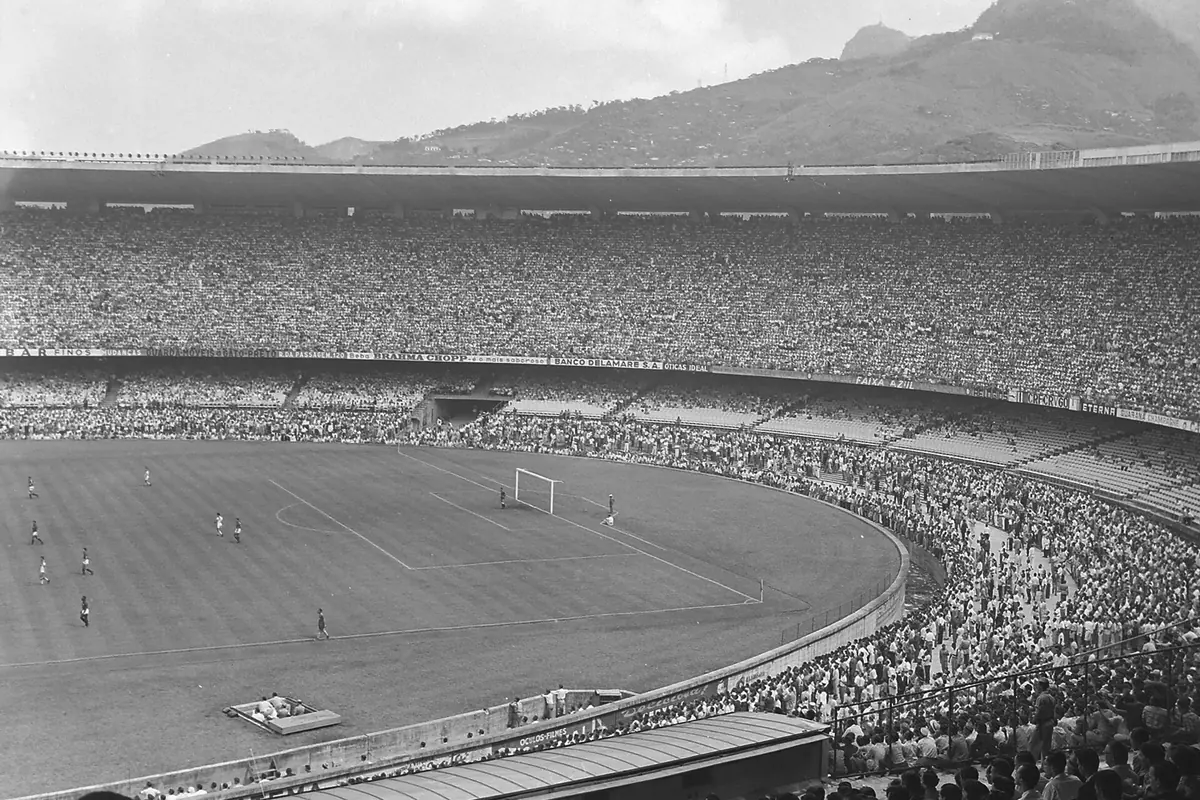
After winning the right to host the 1950 World Cup, Wikipedia says, the Brazilian government sought a new stadium. The first cornerstone was laid on 2 August 1948, leaving a little under two years before the first World Cup game, and work fell behind schedule. When the stadium opened in June 1950 it still looked, in Wikipedia's words, like a construction site. Wikipedia adds that it overtook Hampden Park as the largest stadium in the world, though sources disagree on its capacity. Brazil's organisers claimed it could seat more than 200,000, while other estimates were lower, so no single figure is safe to quote.
The deciding game of 1950
The 1950 tournament ended with a round-robin among four teams, not a single final. On 16 July 1950 Brazil, who needed only a draw, met Uruguay at the Maracanã, and Uruguay won 2-1, with goals from Schiaffino and Ghiggia after Friaça had put Brazil ahead. Wikipedia says the defeat became a significant event in Brazilian history, known as the Maracanazo. Crowd figures for that afternoon vary by source, but Wikipedia calls it the largest crowd ever to see a football game.
Finished in 1965
Wikipedia says that although the stadium came into use in 1950, construction was fully completed only in 1965, seventeen years after it began. In September 1966, after the death of the sports journalist Mário Filho, it was renamed in his honour, though its nickname never went away. It was a mostly terraced ground in these decades, with no individual seats at the time of the World Cup, and it saw crowds of more than 100,000 as many as 284 times, by Wikipedia's count.
Pelé, Zico and the club years
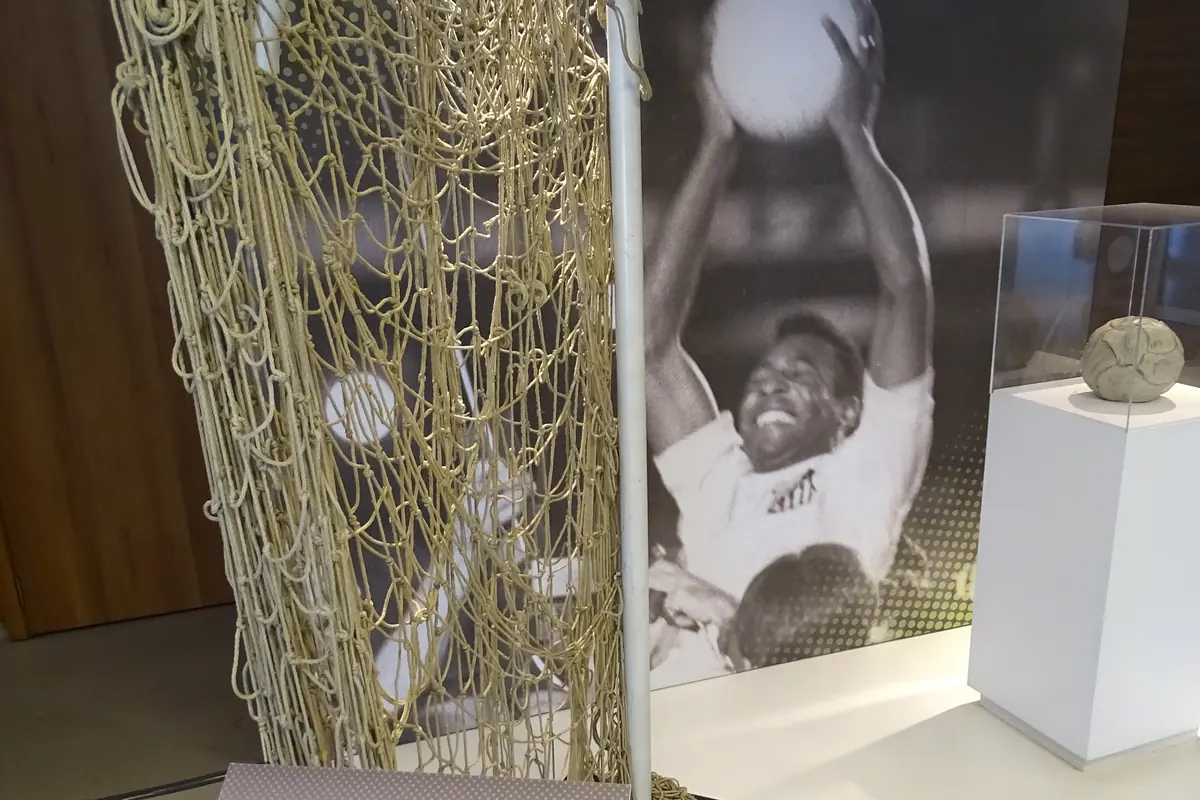
After 1950 the stadium was used mainly for club games between Vasco, Botafogo, Flamengo and Fluminense, plus cup finals. Wikipedia records that Pelé scored the 1,000th goal of his career at the Maracanã in 1969, against Vasco da Gama, and that Zico scored his final goal for Flamengo here in 1989, taking his tally at the stadium to 333. Frank Sinatra, Kiss, Tina Turner and Paul McCartney all drew huge concert crowds in later decades, according to the same article. The booking page for the tour recalls the same non-football history, naming shows by Madonna and the Rolling Stones and Masses led by Pope John Paul II.
All-seater and a landmark listing
Wikipedia reports that the stadium's capacity was greatly reduced as it became all-seater in the late 1990s. The ground was classified as a national landmark in 1998, which means it cannot be demolished. After 2000 it was renovated again, and it reopened in January 2007 with an all-seated capacity of 87,000, in time for the Pan American Games, whose opening and closing ceremonies it hosted. Its all-seated form is the one that visitors on the tour see today, rebuilt once more after 2010.
The 2014 rebuild
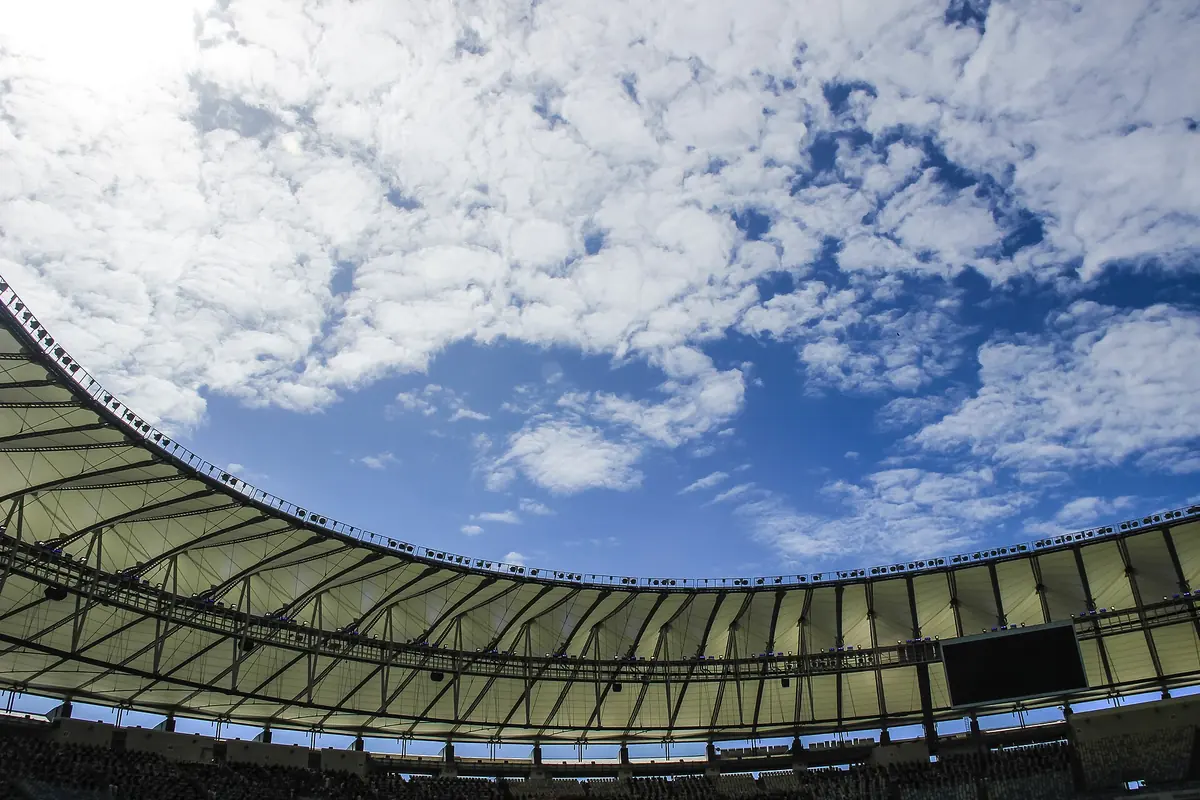
A major reconstruction began in 2010, Wikipedia says, for the 2014 World Cup and the 2016 Olympics. The old two-tier bowl was demolished and replaced by a mainly single-tier one, and the concrete roof gave way to a tensioned fibreglass membrane that covers 95 percent of the seats. The new seats are yellow, blue and white, which with the green pitch echo the Brazilian national colours, and the grey tone of the original facade returned. That is the building you walk through on the tour today. A friendly between Brazil and England on 2 June 2013 marked the reopening.
2014: the final
The Maracanã hosted several matches at the 2014 World Cup and the final itself. On 13 July 2014 Germany beat Argentina 1-0 after extra time, with Mario Götze scoring in the 113th minute, according to Wikipedia's page on the final. Wikipedia also notes that the Maracanã was the only 2014 stadium previously used in 1950. That is the sense in which the booking page's phrase, two World Cup finals, is loosely true: one deciding game, one final.
2016 and after
Wikipedia says the stadium served as the venue for the opening and closing ceremonies of the 2016 Summer Olympics and Paralympics, and for the semi-finals and gold medal matches of the Olympic football tournaments, and that it was the first ceremonies venue at a Summer Olympics not also to host athletics. It later hosted Copa América finals, and Wikipedia says a French group signed an agreement in 2017 to take over its administration.
Read next: Is the Maracanã tour worth it?
Frequently asked questions
When did the Maracanã open?
In 1950, for the World Cup, with the first competitive match played on 24 June. Construction was fully completed in 1965.
What is the Maracanazo?
The 2-1 defeat of Brazil by Uruguay on 16 July 1950 at the Maracanã, the deciding game of the tournament, remembered as a significant event in Brazilian history.
Did the Maracanã host the 2014 World Cup final?
Yes. Germany beat Argentina 1-0 after extra time on 13 July 2014.
Why is it called Mário Filho?
It was renamed in 1966 after the sports journalist Mário Filho, who campaigned for its construction. Most people still say Maracanã.
Sources